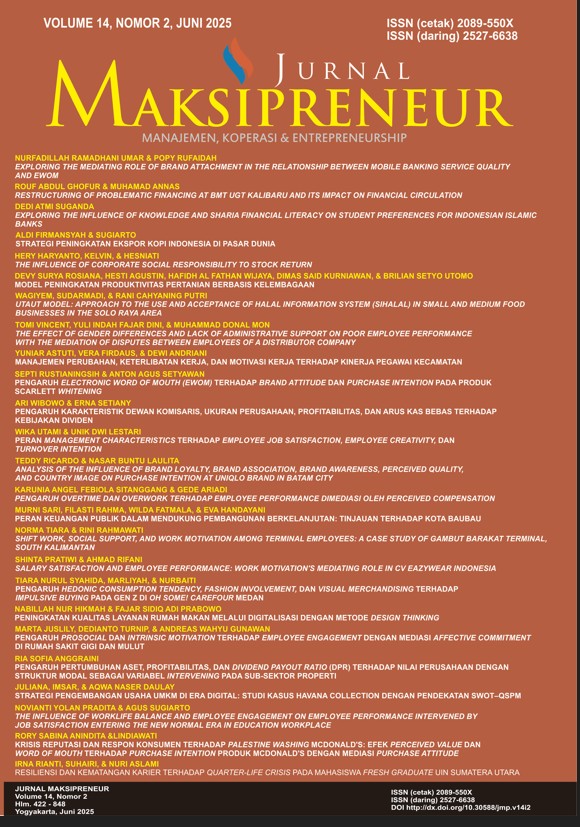
UTAUT Model: Approach to the Use and Acceptance of Halal Information System (SIHALAL) in Small and Medium Food Businesses in the Solo Raya Area
DOI:
https://doi.org/10.30588/jmp.v14i2.1939Keywords:
Performance Expectations, Effort Expectations, Social Influence, Facilitating Conditions, Behavioral Intention to Use System, Acceptance of Information System UseAbstract
The study aims to empirically investigate the UTAUT model, which encompasses performance expectations, effort expectations, social influence, facilitating conditions, interest in using a system, and its impact on the use of information systems. All food sector SMEs in Solo Raya are the population in this study. The sampling method used in this study is convenience sampling, a non-random sampling technique. Primary data was used and collected through distributing questionnaires to 120 SMEs. The findings of this study are that the UTAUT Model, namely performance expectations, effort expectations, and social influences, has an influence on interest in using an information system. The facilitating conditions and SMEs' interest in using information systems will ultimately influence them to accept and use information systems to support their business activities.
References
Abbad, M. M. M. (2021). Using the UTAUT model to understand students’ usage of e-learning systems in developing countries. Education and Information Technologies, 26(6), 7205–7224. https://doi.org/10.1007/s10639-021-10573-5
Abdat, F. A. (2020). Using UTAUT Model to Predict Social Media Adoption among Indonesian SMEs. Saudi Journal of Economics and Finance, 4(10), 498–505.
Al Fajri, M., Panjaitan, E. S., & Hanes, H. (2021). Examine the Role of Motivation in Utaut Model on the Use of Cloud Computing by SMEs During Covid-19 Pandemic. INFOKUM, 09(2).
Andreas, C. (2012). UTAUT and UTAUT 2: A Review and Agenda for Future Research. The Winners, 13(2), 106–114.
Annur, C. (2023). 10 Negara dengan Populasi Muslim Terbanyak Dunia 2023. https://databoks.katadata.co.id/datapublish/2023/10/19/10-negara-dengan-populasi-muslim-terbanyak-dunia-2023-indonesia-memimpin.
Awanto, A. N., Ardianto, Y. T., & Prasetya, D. A. (2020). UTAUT Model Implementation on User Behavior in Use of Information Technology. Jurnal Teknologi dan Manajemen Informatika, 6(1), 53–59. http://http//jurnal.unmer.ac.id/index.php/jtmi
Bayaga, A., & Pelssis, A. du. (2024). Ramifications of the Unified Theory of Acceptance and Use of Technology (UTAUT) among developing countries’ higher education staffs. Education and Information Technologies, 9689–9714.
Bharata, W., & Widyaningrum, P. W. (2020). Analisis Penerimaan Teknologi Mobile Banking Terhadap Use Behavior Melalui Pendekatan Model Utaut 2 (Studi Pada Nasabah KCU BCA Malang). Capital: Jurnal Ekonomi dan Manajemen, 3(2), 139. https://doi.org/10.25273/capital.v3i2.6080
Chairunnisyah, S. (2017). Peran Majelis Ulama Indonesia dalam Menerbitkan Sertifikat Halal pada Produk Makanan dan Kosmetika. Jurnal Edu Tech, 03(02), 64–75.
Chang, A. (2012). UTAUT and UTAUT 2: A Review and Agenda for Future Research The Winners. Binus Journal Publishing, 13(02).
Faizal, Z. P., & Saly, J. N. (2022). Kajian Terhadap Pelaksanaan Self Declare Sertifikasi Halal pada Produk Pangan bagi Konsumen Berdasarkan Hukum Positif di Indonesia. Jurnal Hukum Adigama, 05(02), 450–465.
Faridah, H. D. (2019). Sertifikasi Halal di Indonesia: Sejarah, Perkembangan, dan Implementasi. Journal of Halal Product and Research, 02(02), 68–78.
Ghozali, I. (2008). Structural Equation Modelling: Metode Alternatif dengan Partial Least Square.
Ghozali, I. (2015). Aplikasi Analisis Multivariate dengan Program IBM SPSS 23.
Ghozali, I., Susanto, S., & Handayani, R. S. (2018). Faktor-Faktor yang Memengaruhi Penerimaan dan Penggunaan Sistem Informasi Pengelolaan Keuangan Daerah (SIPKD) dalam Perspektif the Unified Theory of Acceptance and Use of Technology 2 (UTAUT 2) di Kabupaten Semarang. Jurnal Akuntansi dan Auditing, 15(1), 37–68.
Giyanti, I., & Indriastiningsih, E. (2019). Effect of SME Food Entrepreneurs Knowledge on Halal Certification for Certified Awareness using Partial Least Square. Jurnal Teknik Industri, 02(02), 140–151.
Gunawan, H., Sinaga, B. L., & Sigit Purnomo, W. P. (2019). Assessment of the readiness of micro, small and medium enterprises in using E-money using the unified theory of acceptance and use of technology (UTAUT) Method. Procedia Computer Science, 161, 316–323. https://doi.org/10.1016/j.procs.2019.11.129
Hamdani, A., Sari, N., & Umuri, K. (2021). Pengaruh Kesadaran Halal dan Sertifikat Halal terhadap Minat Beli Produk Kentucky Fried Chicken (KFC). Al - Buhuts, 17(02), 198–212.
Handayani, T., & Sudiana, S. (2015). Analisis penerapan model UTAUT (unified theory of acceptance and use of technology) terhadap perilaku pengguna sistem informasi (Studi Kasus: Sistem Informasi Akademik pada STTNAS Yogyakarta). Jurnal Ilmiah Bidang Teknologi, 7(2).
Jameel, A. S., & Alheety, A. S. (2022). Blockchain technology adoption in SMEs: the extended model of UTAUT. International Conference on Intelligent Technology, System and Service for Internet of Everything (ITSS-IoE), 1–6.
Keong, M. L., Ramayah, T., Kurnia, S., & Chiun, L. M. (2012). Explaining intention to use an enterprise resource planning (ERP) system: An extension of the UTAUT model. Business Strategy Series, 13(04), 173–180.
Kusumastuti, D., & Rachmawati, R. (2017). Motives and challenges of small businesses for halal certification: The case of Indonesia. World Journal of Social Sciences, 136–146.
Kwarteng, M. A., Ntsiful, A., Diego, L. F. P., & Novak, P. (2024). Extending UTAUT with competitive pressure for SMEs digitalization adoption in two European nations: A multi-group analysis. Aslib Journal of Information Management, 76(5), 842–868.
Lutfi, A. (2022). Factors Influencing the Continuance Intention to Use Accounting Information System in Jordanian SMEs from the Perspectives of UTAUT: Top Management Support and Self-Efficacy as Predictor Factors. MBTI, 10(4).
Mansour, A. T., Ibrahim, H., & Hassan, S. (2021). The Behavioral Intention’s Role: Facilitating Condition and Use of E-Government Services among SMEs in Saudi Arabia. Turkish Journal of Computer and Mathematics Education (TURCOMAT), 12(3), 1520–1528.
Maryati, T., Syarief, R., & Hasbullah, R. (2016). Analisis Faktor Kendala dalam Pengajuan Sertifikat Halal. (Studi Kasus: Pelaku Usaha Mikro, Kecil dan Menengah Makanan Beku di Jabodetabek). Jurnal Ilmu Produksi dan Teknologi Peternakan, 04(03), 364–371.
Mensah, I. K., & Khan, M. K. (2024). Unified Theory of Acceptance and Use of Technology (UTAUT) Model: Factors Influencing Mobile Banking Services’ Adoption in China. Sage Open, 14(1), 1–18.
Onibala, A. A., Rindengan, Y., & Lumenta, A. S. (2021). Analisis Penerapan Model UTAUT2 terhadap E-Kinerja pada Pemerintah Provinsi Sulawesi Utara. E-Journal Teknik Informatika, 2, 1–13.
Peristiwo, H. (2019). Indonesian Halal Food Industry: Development, Opportunities and Challenges on Halal Supply Chains. Journal of Islamic Studies and Humanities. Journal of Islamic Studies and Humanities, 04(02), 218–245.
Prabowo, S., Rahman, A. A., Rahman, S. A., & Samah, A. (2015). Revealing factors hindering halal certification in East Kalimantan Indonesia. Journal of Islamic Marketing, 06, 268–291.
Puspitasari, N., Firdaus, M. B., Haris, C. A., & Setyadi, H. J. (2019). An application of the UTAUT model for analysis of adoption of integrated license service information system. Procedia Computer Science, 161, 57–65. https://doi.org/10.1016/j.procs.2019.11.099
Rachmawati, K. I., Bukhori, M., Majidah, Y., Hidayatullah, S., Waris, W., & Abdul, A.. (2020). Analysis of Use of Mobile Banking with Acceptance and Use of Technology (UTAUT). International Journal of Scientific & Technology Research, 09(08), 534–540.
Rahayu, H. W., & Fathoni, S. (2023). Kesiapan Badan Penyelenggara Jaminan Produk Halal terhadap Penerapan Sertifikasi Halal di Kota Samarinda. Ghaly (Journal of Islamic Law), 02(01), 1–11.
Ramlan, & Nahrowi. (2014). Sertifikasi Halal sebagai Penerapan Etika Bisnis dalam Upaya Perlindungan bagi Konsumen Muslim. Akham, 14(01), 145–154.
Razak, Z. B. A., Bakar, A. A., & Abdullah, W. S. W. (2017). How perceived effort expectancy and social influence affects the continuance of intention to use e-government. A study of a Malaysian government service. Electronic Government: An International Journal, 13(1), 69–80.
Samartha, V., Shenoy Basthikar, S., Hawaldar, I. T., Spulbar, C., Birau, R., & Filip, R. D. (2022). A Study on the Acceptance of Mobile-Banking Applications in India—Unified Theory of Acceptance and Sustainable Use of Technology Model (UTAUT). Sustainability (Switzerland), 14(21). https://doi.org/10.3390/su142114506
Shbail, M. O. Al, Jaradat, Z., Jbra, O., & Shbeil, S. O. (2022). Factors that influence employees’ acceptance of e-accounting: Evidences from Jordanian SMEs. International Journal of Business Innovation and Research, 83–100.
Sigit AF. (2021). Potensi Makanan Halal Belum Maksimal. Joglo Jateng Online. https://joglojateng.com/2021/07/26/potensi-bisnis-makanan-halal-belum-maksimal/.
Suyanto, M. A., Dewi, L. K. C., Dharmawan, D., Suhardi, D., & Ekasari, S. (2024). Analysis of the Influence of Behavior Intention, Technology Effort Expectancy and Digitalization Performance Expectancy on Behavior to Use of QRIS Users in Small Medium Enterprises Sector. Jurnal Informasi Dan Teknologi, 6(1), 57–63.
Tatasari, T., & Sridadi, A. (2023). Analysis of Factors Affecting the Use of Micro, Small and Medium Enterprises Pre-Employment Systems Using the Unified Theory Acceptance and Use of Technology Model: A Literature Review. YMER, 22(3), 932–963.
Thompson, R. ., Higgins, C. A., & Howekk, J. M. (1991). Personal computing: Toward a conceptual model of utilization. MIS Quarterly: Management Information Systems, 15(01), 125–143.
Tomic, N., Kalinic, Z., & Todorovic, V. (2021). Using the UTAUT model to analyze user intention to accept electronic payment systems in Serbia. Portuguese Economic Journal, 251–270.
Tresnawan, I. G. P. Y., Pradnyana, I. M. A., & Wirawan, I. M. A. (2020). Analisa Penerimaan dan Penggunaan Sistem Informasi Desa (SID) dengan Model Unified Theory of Acceptance and Use of Technology (UTAUT). INSERT: Information System and Emerging Technology Journal, 1(1), 51. https://doi.org/10.23887/insert.v1i1.25876
Triandis, H. (1979). Values, Attitudes, and Interpersonal Behavior, in Howe, H. E. (ed) Nebraska Symposium on Motivation.
Venkatesh, V., Morris, M. G., Davis, G. B., & Davis, F. D. (2003). User acceptance of information technology: Toward a unified view. MIS Quarterly: Management Information Systems, 27(3), 425–478. https://doi.org/10.2307/30036540
Wismantoro, Y., & Susilowati, M. W. K. S. (2021). How does unified theory of acceptance and use of technology (UTAUT) work on adopting financial technology (FinTech) by MSMEs? Jurnal Penelitian Ekonomi dan Bisnis, 06(02), 90–99. https://doi.org/10.33633/jpeb.v6i2.4826
Downloads
Published
How to Cite
Issue
Section
License
Copyright (c) 2025 Wagiyem Wagiyem, Sudarmadi Sudarmadi, Rani Cahyaning Putri

This work is licensed under a Creative Commons Attribution 4.0 International License.
Authors who publish with Jurnal Maksipreneur agree to the following terms:
Authors retain copyright and grant the Jurnal Maksipreneur right of first publication with the work simultaneously licensed under a Creative Commons Attribution 4.0 International License that allows others to share (copy and redistribute the material in any medium or format) and adapt (remix, transform, and build upon the material) the work for any purpose, even commercially with an acknowledgment of the work's authorship and initial publication in Jurnal Maksipreneur.
Authors are able to enter into separate, additional contractual arrangements for the non-exclusive distribution of the journal's published version of the work (e.g., post it to an institutional repository or publish it in a book), with an acknowledgment of its initial publication in Jurnal Maksipreneur. Authors are permitted and encouraged to post their work online (e.g., in institutional repositories or on their website) prior to and during the submission process, as it can lead to productive exchanges, as well as earlier and greater citation of published work (See The Effect of Open Access).