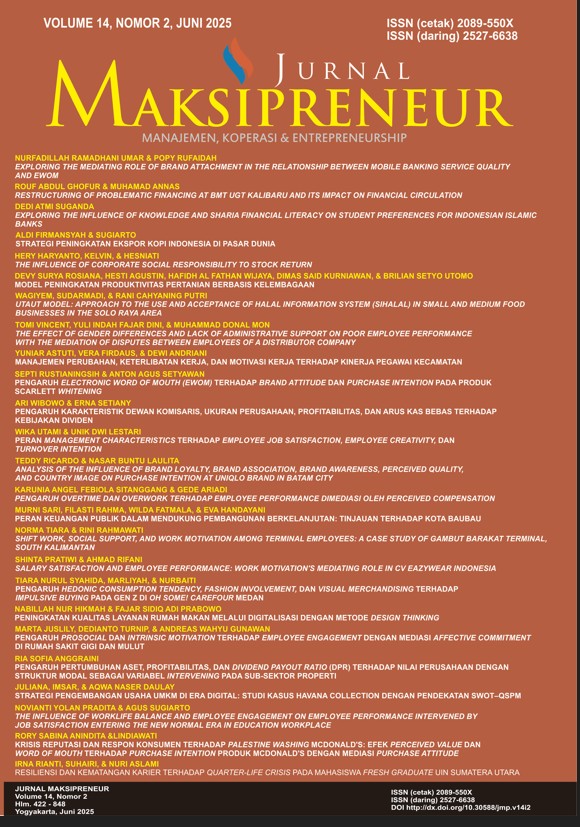
Strategi Pengembangan Usaha UMKM di Era Digital: Studi Kasus Havana Collection dengan Pendekatan SWOT–QSPM
DOI:
https://doi.org/10.30588/jmp.v14i2.2424Keywords:
Business Development Strategy, Digital Era, QSPM, SMEs, SWOTAbstract
This study examines business development strategies for a small and medium enterprise (Havana Collection) in the digital era and prioritizes actionable initiatives using a SWOT–QSPM approach. Internal and external factors were mapped through field observations and document review; weighted scores were computed with IFAS/EFAS, strategic alternatives were formulated via SWOT, and priorities were determined using the Quantitative Strategic Planning Matrix. The firm’s IFAS and EFAS totals indicate a relatively favorable external context (IFAS ≈ 2.56; EFAS ≈ 2.71). QSPM highlights an SO-led pathway: intensifying digital marketing—including paid ads, creator collaborations, and affiliate programs—emerges as the top priority, while product development and market expansion serve as supportive moves. Managerially, the roadmap emphasizes content capability and performance analytics, sequencing quick wins while strengthening core processes. The study demonstrates how a compact, evidence-based framework translates qualitative factor mapping into an implementable priority list for SME growth in the digital landscape.
References
Alviani, N. A., & Munawaroh, M. (2025). Transformasi Digital pada UMKM dalam Meningkatkan Daya Saing Pasar. MASMAN: Master Manajemen, 3(1), 134–140. https://doi.org/10.59603/masman.v3i1.717
Aninda, N., & Sunarya, Y. Y. (2023). Siklus tren fashion di media sosial (Studi kasus tren berkain di Instagram remaja nusantara). Jurnal Seni dan Reka Rancang: Jurnal Ilmiah Magister Desain, 6(1), 1–20.
Armand, F. (2003). Social Marketing Models for Product-Based Reproductive Health Programs: A Comparative Analysis (Occasional Paper Series).
Aulia, M. F., Mangole, R., Sofian, A., Setiyowati, S. W., Asna, A., & Fauzan, F. (2024). Penerapan Digital Marketing untuk Optimalisasi Sistem Informasi Manajemen pada UMKM Mebel Aneka Jaya Kota Malang. Jurnal Pengabdian Masyarakat Bangsa, 2(7), 2842–2849.
Azhar, A. & Daspar, D. (2025). Analisis SWOT UMKM Azkia Collection di Cikarang Selatan. Jurnal Akademik Ekonomi dan Manajemen, 2(3), 819–825. https://doi.org/10.61722/jaem.v2i3.5918
Barney, J. (1991). Firm Resources and Sustained Competitive Advantage. Journal of Management, 17(1), 99–120. https://doi.org/10.1177/014920639101700108
Bator, R. J., Bryan, A. D., & Schultz, P. W. (2011). Who Gives a Hoot?: Intercept Surveys of Litterers and Disposers. Environment and Behavior, 43(3), 295–315. https://doi.org/10.1177/0013916509356884
BPS. (2014). Statistik Indonesia 2014. Badan Pusat Statistik, 676.
De La Torre, A., & De La Vega, I. (2025). Dynamic capabilities and digital innovation: Pathways to competitive advantage through responsible innovation. Journal of Responsible Innovation, 12(1), 2500154. https://doi.org/10.1080/23299460.2025.2500154
Febrianti, O. V. (2014). Usulan Alternatif Strategi PT. X Menggunakan Quantitative Strategic Planning Matrix (QSPM). E- Journal Graduate Unpar, 1(1).
Hendrawan, R. B. (2023). Analisis Perancangan Strategi Pemasaran Produk Batik Menggunakan Metode SWOT dan QSPM (Studi Kasus CV Batik Gemawang) Skripsi, Universitas Islam Sultan Agung. Repositori Unissula.
Hery, H. (2018). Manajemen Strategik (1 ed.). Grasindo.
Kotler, P., & Keller, K. L. (2016). Marketing Management (15 ed.). Pearson Education, Inc.
Kotler, P., & Lee, N. R. (2009). Up and Out of Poverty: The Social Marketing Solution. Pearson Education, Inc.
Norsyaheera, A. W., Lailatul, F. A. H., Shahid, S. A. M., & Maon, S. N. (2016). The Relationship Between Marketing Mix and Customer Loyalty in Hijab Industry: The Mediating Effect of Customer Satisfaction. Procedia Economics and Finance, 37, 366–371. https://doi.org/10.1016/S2212-5671(16)30138-1
Nurbaiti, N., Asmuni, A., Soemitra, A., Imsar, I., & Aisyah, S. (2023). Behavior analysis of MSMEs in Indonesia using fintech lending comparative study between sharia fintech lending and conventional fintech lending. JPPI (Jurnal Penelitian Pendidikan Indonesia), 9(4), 92. https://doi.org/10.29210/020232273
Pratiwi, A. A., Selasi, D., & Suharto, T. H. (2025). Pendampingan Digitalisasi UMKM, Branding dan Manajemen Laporan Keuangan Desa Sukarendah. De Banten-Bode: Jurnal Pengabdian Kepada Masyarakat (PKM) Setiabudhi, 6(1), 1–8.
Prayudi, D., & Yulistria, R. (2020). Penggunaan Matriks SWOT dan Metode QSPM pada Strategi Pemasaran Jasa Wedding Organizer: Studi Kasus pada UMKM Gosimplywedding Sukabumi. Jurnal Maksipreneur: Manajemen, Koperasi, dan Entrepreneurship, 9(2), 225. https://doi.org/10.30588/jmp.v9i2.516
Puspitorini, J., & Risman, A. (2025). Manajemen risiko usaha mikro kecil dan menengah (UMKM). ResearhGate. https://doi.org/10.13140/RG.2.2.34122.48327
Qhoirunnisa, Z. J., & Wafa, Z. (2023). Pelatihan dan Pendampingan Pencatatan Laporan Keuangan Berbasis Digital pada UMKM Gudeg Mbah Djo. Akuntansi, 2(2), 160–167. https://doi.org/10.55606/akuntansi.v2i2.246
Saeedikiya, M., Salunke, S., & Kowalkiewicz, M. (2024). Toward a dynamic capability perspective of digital transformation in SMEs: A study of the mobility sector. Journal of Cleaner Production, 439, 140718. https://doi.org/10.1016/j.jclepro.2024.140718
Samiyah, S., Purwoko, P., & Sukardi, S. (2025). Strategi Pengembangan Usaha Menggunakan Analisis SWOT (Studi Kasus pada Toko Ansar Jaya). Al-Idarah: Jurnal Manajemen dan Bisnis Islam, 6(1), 29–47.
Septi, I., Sunardi, S., Mandiri, D. P., Zahara, A. C., & Febriyanti, A. (2025). Transformasi digital dan dampaknya terhadap UMKM di Desa Ranca Kalapa. Abdi Dharma: Jurnal Pengabdian Kepada Masyarakat Universitas Buddhi Dharma, 5(1), 1–14.
Septi, D., Maharani, A. P., Bazed, A. B. A. R., Abdillah, A. A., Qomariah, N., & Nursaid, N. (2023). Analisis Manajemen Risiko pada UMKM “Tahu Walek Ponkq” Jember. BUDGETING: Journal of Business, Management and Accounting, 5(1), 83–89. https://doi.org/10.31539/budgeting.v5i1.7605
Setyorini, H., Effendi, M., & Santoso, I. (2016). Marketing Strategy Analysis Using SWOT Matrix and QSPM (Case Study: WS Restaurant Soekarno Hatta Malang). Industria: Jurnal Teknologi dan Manajemen Agroindustri, 5(1), 46–53. https://doi.org/10.21776/ub.industria.2016.005.01.6
Sugiyono, S. (2021). Metode Penelitian Kualitatif, Kuantitatif, dan R&D. Alfabeta.
Suryo, M. A. R., & Fitria, S. (2024). Penerapan Metode Quantitative Strategic Planning Matrix (QSPM) dalam Pengembangan Stategi Bisnis Minuman: Studi Kasus Kedai Minum Arah Coklat. Jurnal Dinamika Bisnis dan Kewirausahaan, 1(1), 57–75.
Suwarningsih, N. L. P. I., & Sumiati, S. (2024). Perumusan Strategi Pengembangan Usaha pada UMKM dengan Analisis Matriks SWOT dan QSPM. Jurnal Kewirausahaan dan Inovasi, 3(1), 209–221. https://doi.org/10.21776/jki.2024.03.1.17
Syaukat, Y. (2011). Mengembangkan Pembiayaan Syariah Pertanian. Republika, 23.
Tarigan, D. A. B., & Ompusungu, D. P. (2023). Strategi Pengembangan UMKM Melalui Analisis SWOT (Studi pada Usaha UMKM Gorengan di Lokasi Wisata Juma Bakal Desa Dokan). Advances in Social Humanities Research, 1(2), 81–86.
Teece, D. J., Pisano, G., & Shuen, A. (1997). Dynamic capabilities and strategic management. Strategic Management Journal, 18(7), 509–533. https://doi.org/10.1002/(SICI)1097-0266(199708)18:7%3C509::AID-SMJ882%3E3.0.CO;2-Z
Ulupui, I. G. K. A., Zairin, G. M., Musyaffi, A. M., & Sutanti, F. D. (2024). Navigating uncertainties: A tri-factorial evaluation of risk management adoption in MSMEs. Cogent Business & Management, 11(1), 2311161. https://doi.org/10.1080/23311975.2024.2311161
Downloads
Published
How to Cite
Issue
Section
License
Copyright (c) 2025 Juliana Juliana, Imsar Imsar, Aqwa Naser Daulay

This work is licensed under a Creative Commons Attribution 4.0 International License.
Authors who publish with Jurnal Maksipreneur agree to the following terms:
Authors retain copyright and grant the Jurnal Maksipreneur right of first publication with the work simultaneously licensed under a Creative Commons Attribution 4.0 International License that allows others to share (copy and redistribute the material in any medium or format) and adapt (remix, transform, and build upon the material) the work for any purpose, even commercially with an acknowledgment of the work's authorship and initial publication in Jurnal Maksipreneur.
Authors are able to enter into separate, additional contractual arrangements for the non-exclusive distribution of the journal's published version of the work (e.g., post it to an institutional repository or publish it in a book), with an acknowledgment of its initial publication in Jurnal Maksipreneur. Authors are permitted and encouraged to post their work online (e.g., in institutional repositories or on their website) prior to and during the submission process, as it can lead to productive exchanges, as well as earlier and greater citation of published work (See The Effect of Open Access).